


Mold Remediation Options for Healthier Homes
A musty odor after a leak, staining beneath a sink, or symptoms that seem worse at home can leave families feeling unsettled and unsure where to begin. Mold remediation options are not one-size-fits-all because the right solution depends on the moisture source, the amount of contamination, the materials affected, and the health needs of the people using the property.
The goal is not to make a visible spot disappear. Effective remediation addresses the conditions that allowed mold to grow, removes or treats contamination appropriately, and provides evidence that the space has been properly evaluated afterward. For homeowners, renters, property managers, and buyers, that distinction can protect both health and property value.
Understanding Your Mold Remediation Options
Mold needs moisture to grow. A slow plumbing leak, roof intrusion, poor drainage, condensation, flooding, or HVAC issue can create the conditions for contamination behind walls, under flooring, inside cabinets, or within other concealed areas. Cleaning a surface without correcting the moisture problem may provide temporary relief, but growth can return.
Most professional mold remediation options fall into a few categories: targeted cleaning and treatment, removal of contaminated porous materials, controlled demolition for significant or hidden growth, and preventative treatment after the source has been corrected. These approaches are often combined rather than chosen in isolation.
A small, contained issue on a nonporous surface may need a very different response than water-damaged drywall with contamination inside a wall cavity. The work should be proportional to the problem, not automatically more disruptive than necessary.
Start With Inspection and Independent Testing
Before choosing a remediation method, determine what is happening and where. A qualified inspection considers visible conditions, moisture readings, water-damage history, odors, building materials, and areas where hidden contamination is likely. In some cases, carefully opening a small section of affected material is the only way to confirm the full extent of a concealed problem.
Independent laboratory testing can add valuable clarity, particularly when there are health concerns, a real estate transaction, a tenant dispute, or no obvious visible growth. Testing may include surface, air, dust, or bulk-material samples depending on the situation. Results should be interpreted alongside the inspection, not treated as a standalone diagnosis of a building.
No single air sample can prove that every room is free of mold, and a normal result does not erase visible water damage. However, health-department-accredited laboratory findings can help establish a baseline, guide a remediation plan, and support a documented clearance process after work is complete.
Targeted Cleaning and Low-Toxicity Treatment
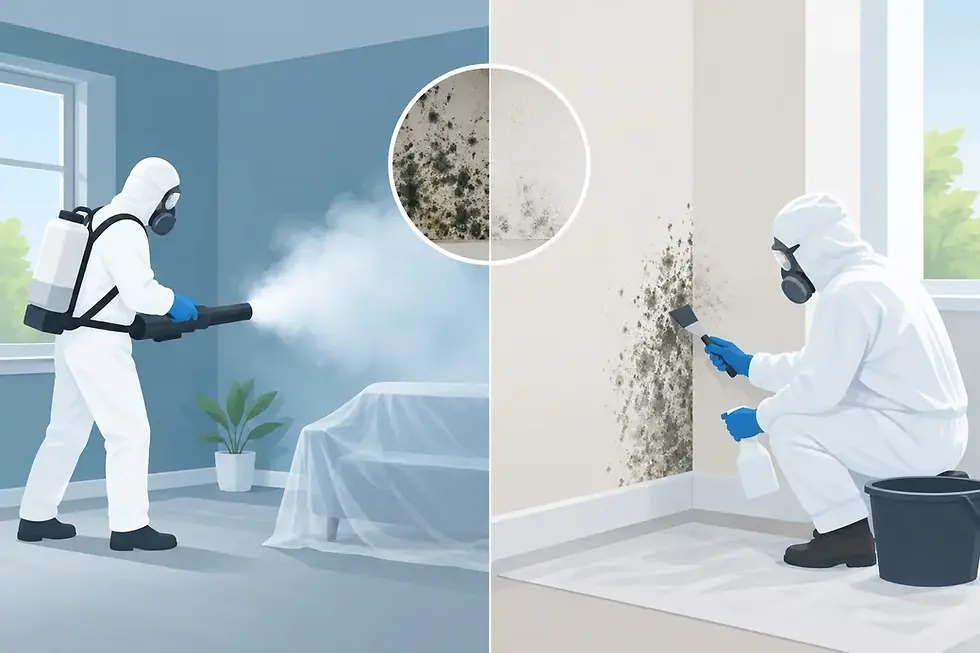
For limited contamination on materials that can be effectively cleaned, targeted remediation may be appropriate. This generally involves containing the affected area, physically removing residue, addressing the moisture source, and applying a treatment suited to the material and conditions.
The treatment itself matters, especially in homes with children, pets, older adults, or people who are already medically sensitive. Some conventional approaches rely heavily on harsh chemical products that may create strong odors or introduce additional irritants. A health-conscious approach can use biodegradable, low-toxicity products designed to penetrate affected building materials and address contamination without relying on unnecessarily aggressive chemicals.
At Mold Neutralizers, this approach combines naturally occurring enzymes and oxidation-based treatment with careful remediation practices. Treatment is not a substitute for removing materials that are too damaged to save, but it can be a meaningful option when used as part of a complete plan.
Removing Contaminated Porous Materials
Drywall, insulation, carpeting, padding, ceiling tiles, particleboard, and some fabrics can absorb water and support mold growth below the surface. When these materials are extensively contaminated or remain damp for too long, removal is often the more reliable option.
Proper removal is not simply tearing out damaged materials. The work area may need containment to limit cross-contamination, and workers should use appropriate protective measures. Materials should be removed in a controlled way, surrounding surfaces should be cleaned, and the underlying framing or subfloor should be inspected before reconstruction begins.
This can feel disruptive, especially when a kitchen, bathroom, bedroom, or office is involved. Yet selective removal is often less costly and less stressful than allowing a hidden issue to spread through additional materials. The key is to remove what cannot reasonably be restored while avoiding unnecessary demolition of unaffected areas.
When Controlled Demolition Is Necessary
Major water losses, long-term leaks, sewage contamination, widespread growth, or damage inside walls and flooring systems may require controlled demolition. This is the most invasive remediation option, but sometimes it is the only responsible path to reach the source and remove severely compromised materials.
A clear scope of work is essential before demolition begins. Property owners should understand which materials are being removed, why removal is recommended, how containment will be managed, and what conditions must be met before rebuilding. For commercial and industrial properties, the plan should also account for occupancy, operations, sensitive equipment, and employee safety.
Demolition should never be treated as the default answer to every mold concern. It is appropriate when evidence supports it, not because a contractor prefers the largest possible project.
Prevention Treatment After Remediation
Once contaminated materials have been cleaned or removed and the moisture source has been corrected, prevention becomes the next priority. This may include treating susceptible framing, wall cavities, crawlspaces, attic materials, or other building components before they are closed back up.
Prevention also includes practical building maintenance: repairing leaks promptly, keeping indoor humidity under control, maintaining drainage away from the structure, servicing HVAC systems, and responding quickly after a flood or plumbing failure. In Arizona and California, dry outdoor conditions do not eliminate the risk. Air-conditioning condensation, slab leaks, roof failures, bathroom humidity, and seasonal storms can all create moisture problems indoors.
A preventative treatment can add another layer of protection, but it cannot overcome an active leak or ongoing humidity issue. The building must be kept dry for any remediation result to last.
Why Clearance Testing and Reporting Matter
A remediation project should not end when the crew leaves. Post-treatment inspection and clearance testing provide a more accountable finish, particularly for people with exposure concerns or properties being sold, leased, or managed professionally.
Clearance may involve a visual inspection, moisture verification, and independent laboratory samples selected for the project conditions. A clearance report documents whether the remediated area meets the agreed criteria after cleaning and treatment. It gives property owners something more meaningful than a verbal assurance that the work is done.
For a buyer, seller, landlord, tenant, or property manager, that documentation can be especially valuable. It demonstrates that the issue was investigated, addressed, and evaluated through a defined process. For families who have been living with unexplained odors or concerns about exposure, it can also bring needed confidence before moving back into the space.
Choosing the Right Path for Your Property
The best remediation plan balances health protection, building science, cost, and disruption. Start by asking whether the moisture source has been identified, whether hidden areas were evaluated, which materials can be saved, and how the outcome will be verified. Be cautious of anyone who recommends fogging, spraying, or covering stains without investigating the cause.
If anyone in the property has serious or persistent health concerns, consult a qualified medical professional. Remediation companies can evaluate building conditions, but they should not diagnose medical conditions or promise that mold work will resolve every symptom. A responsible provider recognizes the concern, explains the evidence clearly, and stays within the scope of environmental services.
Mold can make a home or workplace feel uncertain, but uncertainty does not have to be the final answer. With a careful inspection, a proportionate remediation plan, and independent verification, you can move from concern to a healthier, better-documented property.


Comments