


Fogging Versus Remediation: What Solves Mold?
A musty odor after a leak can make any home feel uncertain, especially when someone in the household is dealing with persistent respiratory irritation or unexplained symptoms. In the debate over fogging versus remediation, the central question is not which service sounds faster. It is whether the process identifies and addresses the moisture and contamination that allowed mold to grow in the first place.
Fogging can have a place in a carefully designed mold project. But fog alone is rarely a complete answer to an active mold problem, particularly when growth is concealed behind walls, under flooring, inside HVAC components, or within water-damaged materials. A health-conscious plan begins with evidence, follows the moisture, and verifies the result when the work is complete.
What Mold Fogging Does
Fogging disperses a treatment solution into the air as very small droplets. Depending on the equipment and product used, those droplets may settle onto exposed surfaces, contact airborne particles, or help reduce odors in an enclosed area. It is often marketed as a quick way to "kill mold" throughout a building.
The appeal is understandable. Fogging can be less disruptive than opening a wall, removing damaged materials, or setting up containment. For a property owner preparing a home for sale, managing a rental, or trying to restore a business after water damage, a fast-looking solution can feel like the obvious choice.
The limitation is reach. A fog cannot reliably penetrate every hidden cavity, travel through intact drywall, remove mold roots from porous material, or fix the plumbing leak, roof failure, condensation, or humidity condition feeding the growth. It also does not remove dust, debris, or contaminated building material. If the source remains, mold can return.
Some fogging products may introduce fragrances, harsh disinfectants, or other chemicals that are not appropriate for every occupant or every setting. People with chemical sensitivities, asthma, immune concerns, or a history of mold-related illness should ask exactly what product will be used, how the area will be ventilated, and what re-entry guidance applies.
Fogging Versus Remediation: The Real Difference
Professional remediation is a process, not a single treatment. Its purpose is to return the affected area to a condition where the moisture source has been corrected and contamination has been properly removed or treated according to the scope of the problem.
That usually starts with an inspection. A qualified inspector looks beyond visible spots on a wall or ceiling and considers the building history: leaks, prior flooding, roof or plumbing repairs, elevated humidity, HVAC issues, odors, staining, and rooms where symptoms seem worse. Moisture meters, thermal imaging, targeted sampling, and independent laboratory analysis can help clarify what is present and where further investigation is warranted.
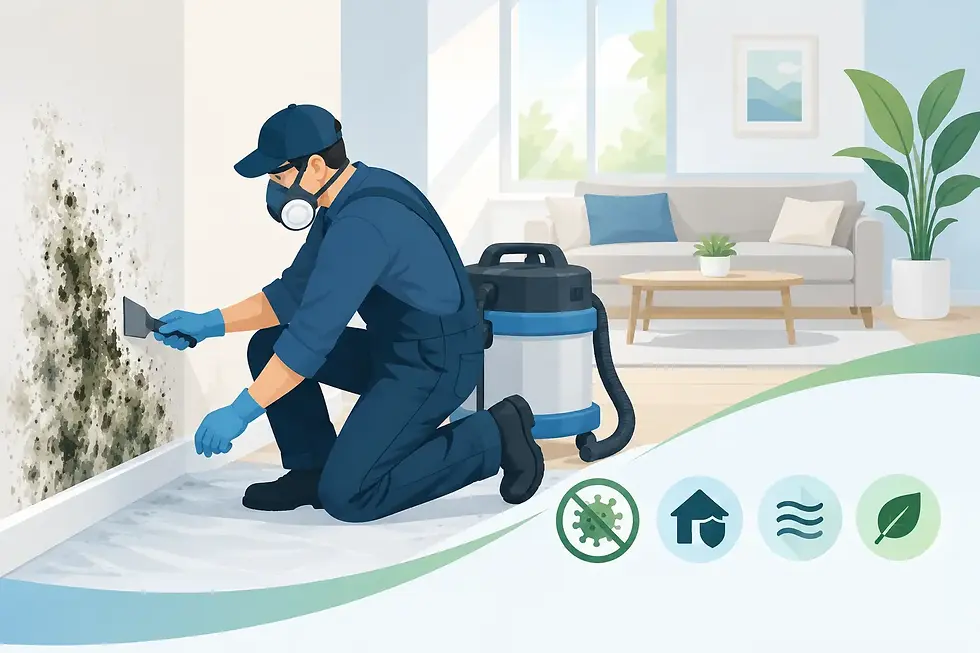
Once the scope is understood, remediation may include isolating the work area, controlling dust, removing unsalvageable porous materials, cleaning recoverable structural surfaces, and correcting the moisture condition. The exact approach depends on the materials involved and the extent of contamination. A small, recent surface issue in a well-ventilated bathroom is not handled the same way as a long-term leak affecting framing, insulation, flooring, and adjacent rooms.
Fogging may be used as one component after physical cleaning and source control, particularly when a treatment is selected to reach complex surfaces or help address residual contamination. It should not be used to disguise odors, avoid necessary investigation, or substitute for removal of mold-damaged materials when removal is needed.
Mold must be removed, not merely covered up
A common misconception is that dead mold no longer matters. While stopping active growth is essential, mold fragments, spores, and related debris can remain in dust and damaged materials. For people who are especially sensitive, leaving that material behind may continue to be a concern.
That is why remediation emphasizes cleaning, removal when appropriate, and verification rather than simply applying a product over a visible area. Paint, encapsulants, and surface sprays can have limited roles in the right circumstances, but they are not a substitute for correcting the cause of the problem.
The moisture source decides whether the fix lasts
Mold needs moisture. If a contractor fogs an area without finding the water source, the building may look better briefly while the underlying condition continues. A slow supply-line leak, failed shower pan, roof intrusion, foundation moisture, or poorly managed indoor humidity can keep feeding concealed growth.
A defensible remediation plan identifies what must be repaired before treatment is considered complete. For tenants, buyers, and property managers, that documentation matters. It can help establish what was found, what action was taken, and whether the property received appropriate follow-up.
When Fogging May Be Appropriate
Fogging is not automatically a red flag. It can be useful when it supports, rather than replaces, a properly scoped remediation plan. After contaminated materials are removed and detailed cleaning is complete, a low-toxicity treatment may be applied to remaining structural surfaces or hard-to-reach areas. The product, application method, and occupancy plan should fit the property and the people using it.
At Mold Neutralizers, the approach centers on biodegradable treatment using naturally occurring enzymes and oxidation rather than dangerous chemicals. That can be especially meaningful for households and workplaces seeking a more health-conscious option. Still, even a lower-toxicity treatment works best within the larger process of inspection, moisture correction, cleaning, and independent verification.
Fogging may also be considered for odor support after the underlying contamination has been addressed. An odor should never be treated as proof that a building is clean or unsafe on its own. It is a clue that deserves investigation, not a diagnosis.
Questions to Ask Before You Approve a Mold Service
Before accepting a fogging-only proposal, ask the provider how they determined the scope of the problem. A credible answer should address the moisture source, affected materials, containment needs, cleaning methods, and how the outcome will be verified.
Ask whether testing is performed by an independent laboratory and whether the company can explain what the results do and do not mean. Sampling can be useful, but it is only one part of the picture. Inspection findings, moisture conditions, visible damage, and the building’s history matter too.
You should also ask what happens if mold is found behind a wall or under flooring. If the answer is simply to fog the space without investigating, consider whether the proposed work truly addresses the risk. Request information about the treatment ingredients, safety instructions, expected downtime, and whether a post-treatment clearance report is available.
For real estate professionals and property managers, documentation is more than paperwork. It gives owners, residents, buyers, and stakeholders a clearer record of the condition, the corrective work, and the results. For families, it can provide much-needed confidence that decisions are being made with both building integrity and health in mind.
Why Clearance Matters After Remediation
The end of active work is not always the end of the process. Post-remediation inspection and clearance testing can help determine whether the project met its goals. Independent assessment is particularly valuable because it separates verification from the remediation work itself.
Clearance does not mean a property is sterile. Mold exists naturally outdoors, and every building contains some level of ordinary dust and environmental particles. Instead, clearance helps assess whether the remediated area has been properly cleaned, dried, and returned to an acceptable condition based on the project scope and professional evaluation.
If you are deciding between a quick fogging appointment and a full remediation recommendation, begin with the evidence. A careful inspection can prevent unnecessary demolition when the issue is limited, while also preventing a superficial treatment from leaving a hidden problem behind. The right next step is the one that protects the people in the building and gives the property a genuine path back to dry, clean, documented conditions.


Comments